
Play therapy that helps children process, heal and grow
Helping your child feel more like themselves at home, at school, and everywhere in between.


Play is how children make sense of the world
Watching your child struggle and not knowing how to help is one of the hardest things a parent can face. Play therapy gives children a natural, supported way to explore and express what they're going through.
With the right support, they can start to feel more settled, more confident, and more like themselves.
What play therapy makes possible
Children speak through play
Play therapy meets children in the language they already know, making it easier for them to express emotions they don't yet have words for.
Children move at their own pace
Play therapy never forces a child to go further than they're ready to. Each session creates space for them to open up gradually, in a way that feels safe.
Parents are part of the process
You won't be left wondering what's happening in sessions. We keep parents involved — and parent counseling can support you, too.
It's more than just playing
Sessions are guided by a trained therapist, grounded in REGISTERED PLAY THERAPIST™ training through the Association for Play Therapy.
Questions parents often ask
-
Play therapy can be helpful for children navigating a wide range of experiences — anxiety, depression, grief, trauma, family changes, school difficulties, or simply struggling to express what they're feeling. If your child seems withdrawn, is having trouble at school or at home, or is going through something you sense they can't put into words, play therapy may be a good fit. A consultation is the best place to start if you're unsure.
-
Traditional talk therapy asks children to identify and articulate their feelings — something most adults find difficult, let alone kids. Play therapy uses toys, art, and imaginative play as the medium instead. Children naturally process their experiences through play, so this approach works with how they're already wired rather than asking them to communicate in a way that doesn't come naturally yet.
-
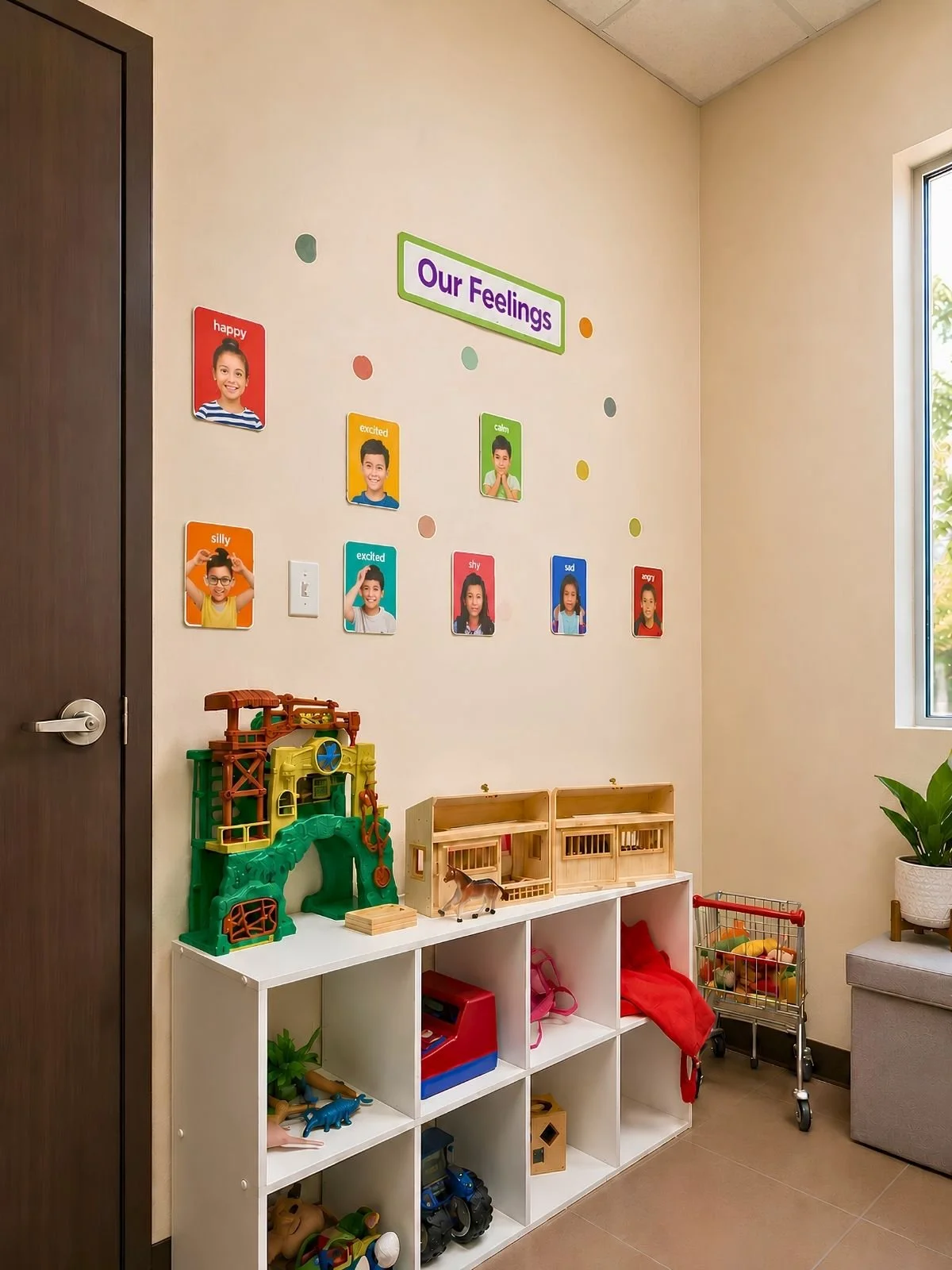
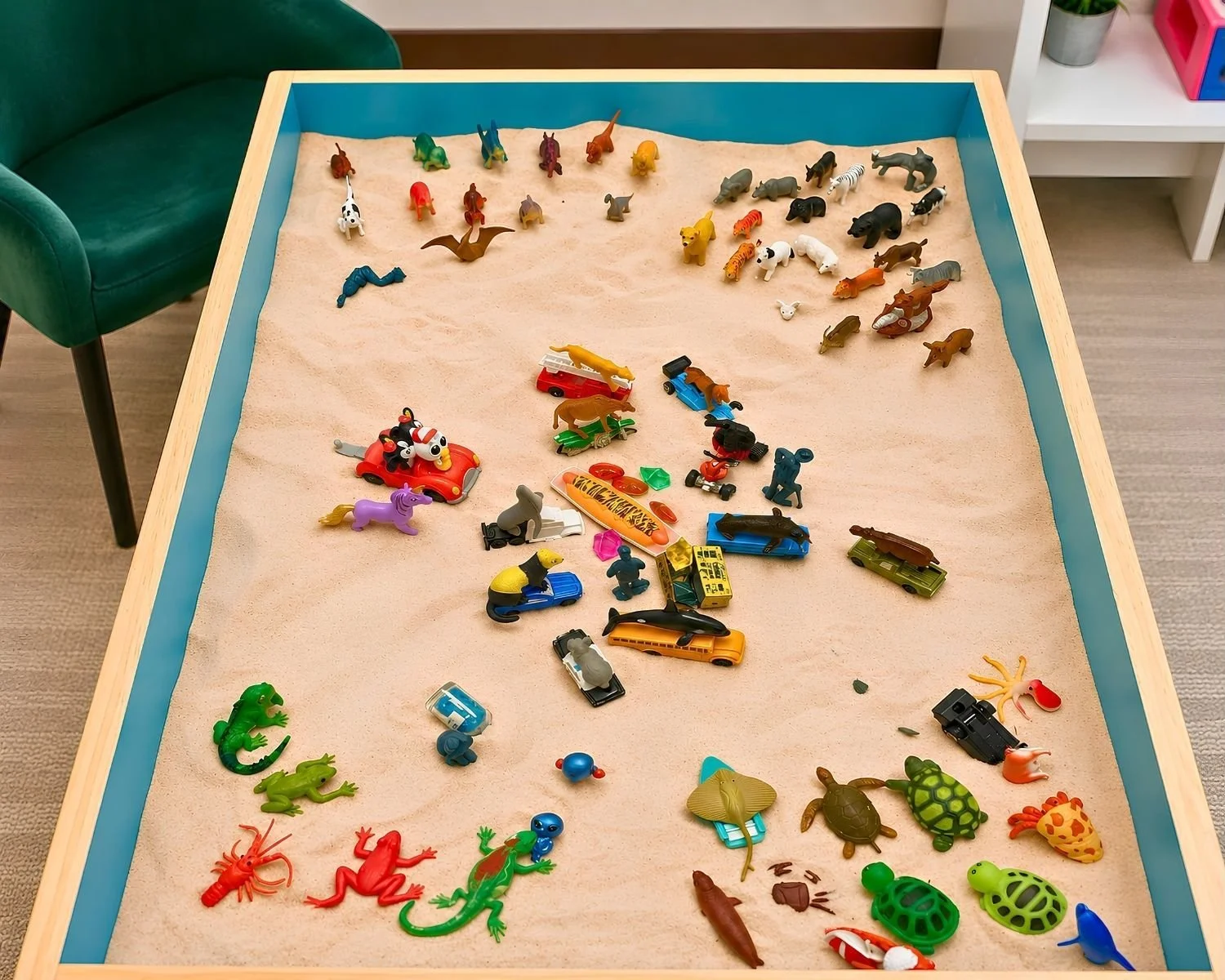
Sessions take place in a specially designed playroom with toys, art supplies, and other materials chosen to encourage expression and exploration. Your child's therapist guides the session with clear therapeutic goals in mind, but the child leads within that structure. Our approach is grounded in REGISTERED PLAY THERAPIST™ training through the Association for Play Therapy. It may look like free play from the outside, but every session is intentional and observed closely by the therapist.
-
In most cases, children do better when they have their own space in the session. It gives them room to open up without feeling watched. Parents typically wait nearby and are brought in by the therapist when it's helpful to the process. You'll never be out of the loop; your involvement outside the session is an important part of your child's progress.